How I Write Prompts — the 11-Element Method
A prompt here is never a pile of keywords. Every cut is designed first: the scene is decomposed into eleven named elements — who receives, who acts, what the contact deforms, what the camera can physically see — and only then translated into one English scene description. Every cut of the six illustrated stories on this site was written this way. Below, the method is demonstrated end-to-end on three pieces designed and generated specifically for this page.
The eleven elements
The schema below is the exact legend stored in the story production database. The same schema runs across all my work — for action scenes the roles sharpen (attacker / receiver), for quiet scenes they generalize (the girl's gesture / the creature that receives it).
| art | Art style — one shared constant per work, never rewritten per cut |
| look | The character's fixed appearance (kept identical across every cut) |
| recv | The receiver — the creature or person the action lands on |
| atk | The act — touch, hold, carry, bestow (not necessarily an attack) |
| expr | Expression — including where the gaze physically points |
| fluid | Effects — light, powder snow, sparks, spray, fluids |
| bond | Contact — written as deformation: fur pressed in, fingers sinking |
| comp | Composition — declare frame occupancy first (who owns which part of the frame) |
| cam | Camera — written as a viewpoint phrase; never the word 'camera' (it materializes as an object) |
| bg | Background — short; piling scenery words pulls the shot wide |
| neg | Negative — quality control only; never used to fight the positive prompt |
Live demonstration — three pieces made for this page
To show the method end-to-end, these three pieces were designed with the 11 elements and then generated, specifically for this page — no reuse from other galleries. The girl's look element is one fixed sentence across all three (that is what the look element is for). Three takes were generated per design and the keeper chosen by eye. Hover the numbered pins — or the rows — to see which words put which thing where.
A. “The Water Dragon's Greeting” — contact written as deformation
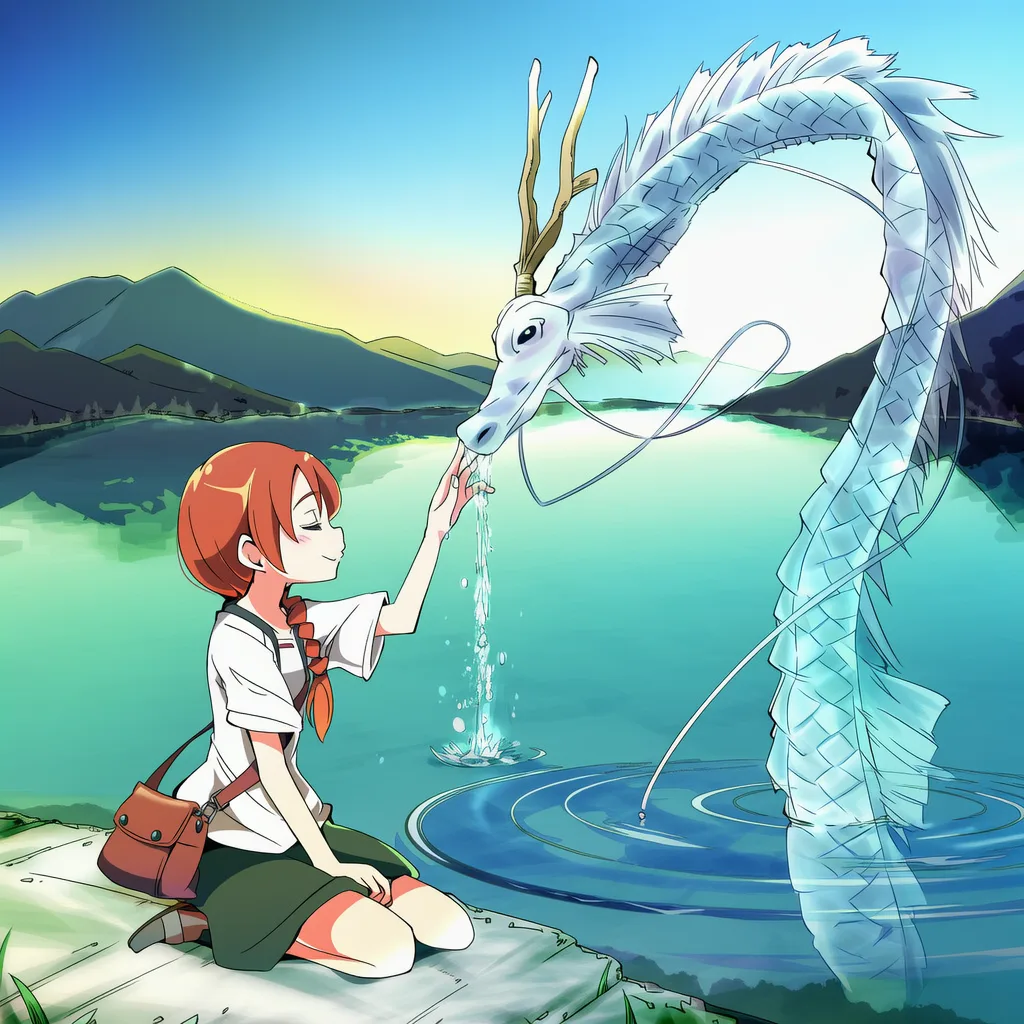
▸ Full production prompt (base / char1 / char2 / negatives)
B. “Market Morning in the Royal Capital” — declaring frame occupancy
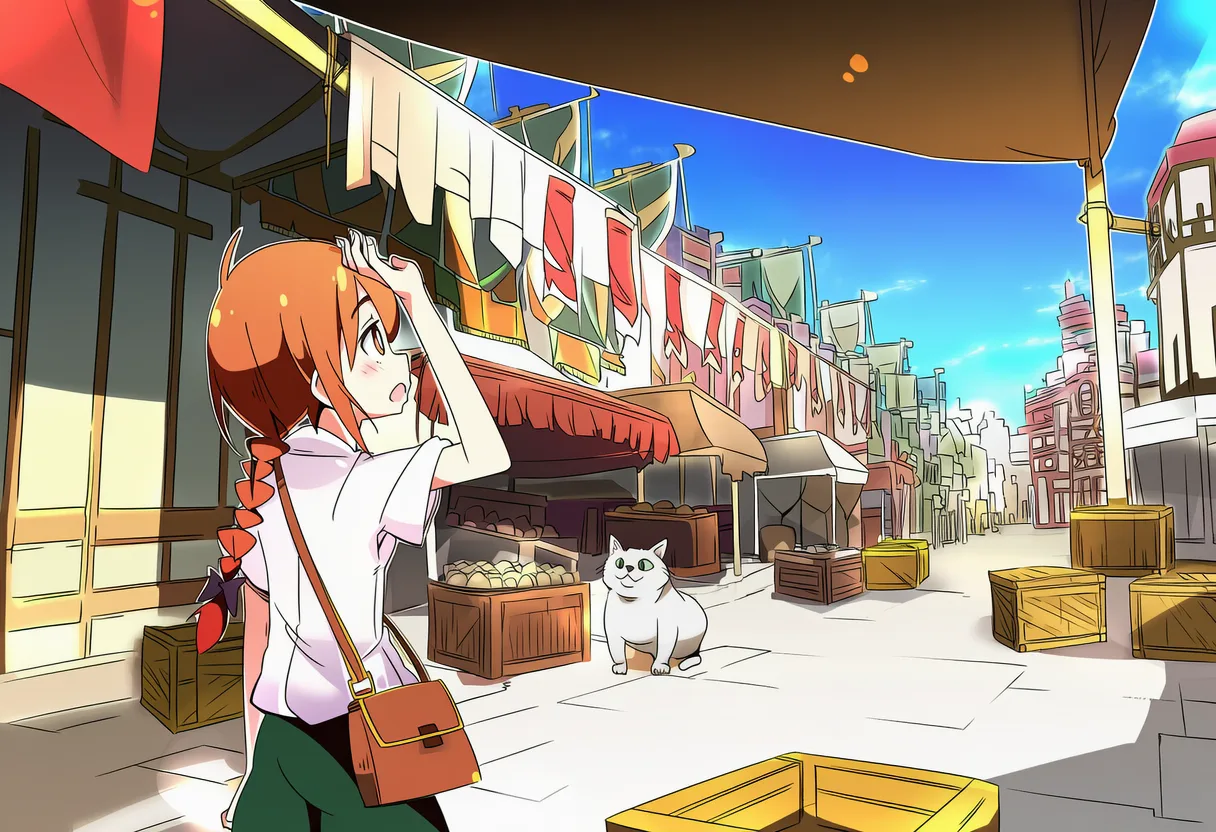
▸ Full production prompt (base / char1 / char2 / negatives)
C. “The Familiar Exam” — one event written from both sides
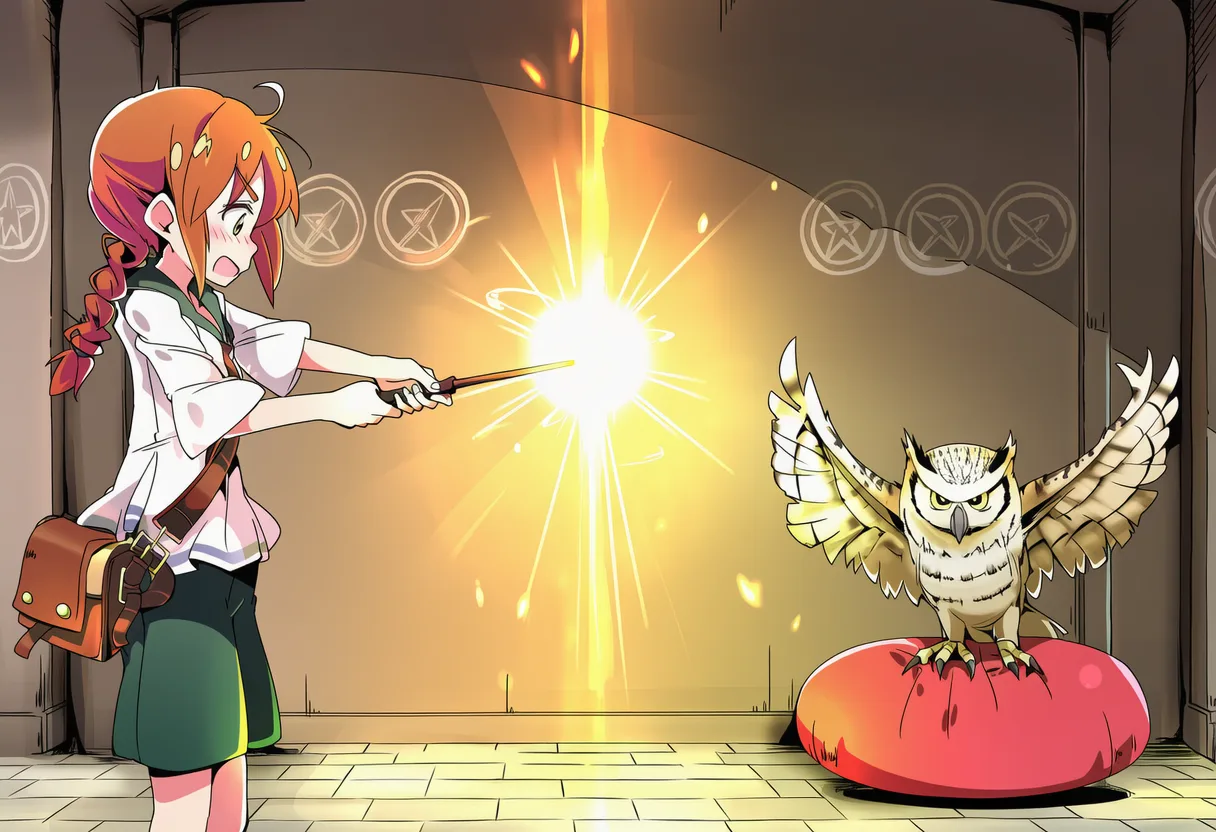
▸ Full production prompt (base / char1 / char2 / negatives)
The same method, sharpened — the prompt WIKI (18+)
This method was originally forged on mature works, where every proven cut is stored in a personal WIKI: decomposed into the 11 elements as English–Japanese pairs, tagged along 12 axes (position, act, camera angle, framing...), rated, and reused as templates. Real WIKI entries — image plus full element breakdown — are shown in the adults-only wing.
WIKI examples (18+, age check) →